Video workflow comparison

Choosing vidrush alternatives for your next video

If you are weighing vidrush alternatives, start with the video you need to make rather than a feature list. Vidrush may suit one project while a manual editor or another creation workflow suits the next; your source material, editing needs, and review process should decide.

Vidrush video creation imagery

The most useful alternative is the one that removes a specific obstacle without taking away the control your project needs.

Three mechanisms behind a better fit

Compare how each approach handles source material, creative decisions, and revisions. These four project situations show why different creators reach different conclusions.

First-time creator

You have a topic and a rough outline but no footage. Compare how much structure Vidrush and another workflow ask you to supply before either can produce a draft. An empty timeline and a guided starting point solve different problems.

Choose the path that helps you establish a workable first cut without hiding decisions you still want to make yourself.

how to use vidrush ai
Footage-led editor

You already have interviews, screen recordings, or event clips. A hands-on editor may be preferable when the exact frame, spoken quote, and order of your own footage matter more than getting an initial concept on screen.

Test whether the workflow preserves the material you must use and gives you enough room to rearrange it.

vidrush ai app

Channel producer

You publish videos with a recurring format. Compare how reliably you can repeat your opening, pacing, visual style, and closing treatment. A quick first draft is less valuable if every episode needs extensive correction.

Favor the process that makes a consistent review-and-revision routine possible across episodes.

vidrush examples free

Careful reviewer

Your video includes names, dates, quotations, or claims that another person must approve. Evaluate how easily you can inspect the script and visuals before publishing, regardless of which creation route produced the draft.

Keep factual verification and final approval in human hands; neither Vidrush nor an alternative replaces them.

is vidrush a legitimate platform

Run a step-by-step comparison

Use the same brief for Vidrush and any other method you are considering. Changing the assignment between tests makes the results difficult to judge.

  1. 1

    Write one production brief

    Specify the intended audience, core message, approximate length, required source material, and any words or visuals that must appear. Keep a separate list of claims that need checking. This gives each workflow the same starting conditions.

  2. 2

    Make a representative draft

    Try a small but meaningful segment rather than a polished showcase. Notice how you supply footage or instructions, how the first version is assembled, and which decisions remain yours. Record friction as well as what feels convenient.

  3. 3

    Revise and inspect the result

    Request or perform the same changes in each workflow: replace a visual, correct a line, adjust pacing, and check the final sequence. The easier first draft is not always the easier video to finish.

Look beyond the first frame

An attractive result tells you little about the work required to reach it. Examine both the production environment and the finished video.

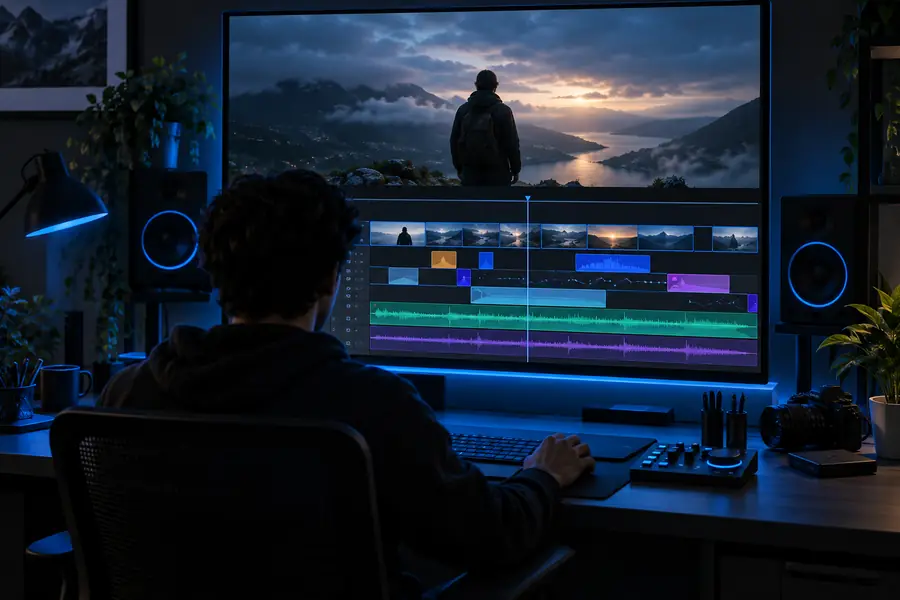
  • Production workspace
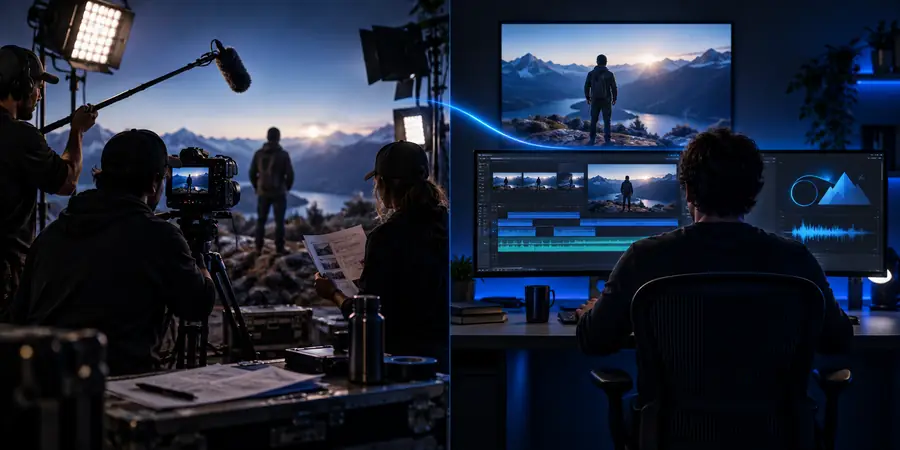
  • Illustrative result

These are separate illustrative images, not a measured before-and-after from one Vidrush project. For your own comparison, keep the brief identical and inspect what each workflow lets you change.

Illustrative video-editing workspace with a preview and timeline
Illustrative creator-video result

Know the limits and edges

No comparison page can establish that one route is best for every video. These boundaries are worth checking with your own material.

  • A sample cannot prove every editing capability

    One successful draft does not show how a workflow handles difficult source clips, precise timing, or repeated changes. Vidrush and other approaches may feel different once you move past a straightforward test.

    WorkaroundInclude one awkward edit in your trial, such as replacing a clip without changing the surrounding narration.

  • Visual polish does not verify facts

    A convincing video can still contain an incorrect date, an unsupported statement, or imagery that implies more than the evidence shows. This applies whether the draft starts with Vidrush or a manual process.

    WorkaroundCheck names, claims, quotations, and permissions against the original sources before publishing.

  • An illustrative image is not a product guarantee

    The paired visuals above show a workspace and a possible style of output, not a documented transformation or a promise of what your project will produce.

    WorkaroundJudge an actual draft made from your brief instead of relying on a gallery image.

  • Project needs can change

    A workflow that suits a quick explainer may be less suitable when you later need exact footage selection or a tightly reviewed documentary sequence. There is no permanent winner for every format.

    WorkaroundRevisit the comparison when your source material, collaborators, or review requirements change.

Compare Vidrush with manual editing

This table contrasts a Vidrush-led starting path with building a video directly in a timeline editor. It is a decision guide, not a claim that either path has a universal feature set.

1

Starting point

Vidrush-led workflow

Assess how well a written concept can become a useful draft.

Manual timeline workflow

Begin by organizing footage, audio, and graphics yourself.

2

Existing footage

Vidrush-led workflow

Check how your required clips are incorporated before committing to a project.

Manual timeline workflow

Place and trim your chosen clips directly on the timeline.

3

Shot-level decisions

Vidrush-led workflow

Test whether you can revise the exact visual choices that matter.

Manual timeline workflow

Choose clip order and cut points individually.

4

First-draft effort

Vidrush-led workflow

Measure the time from brief to something you can review.

Manual timeline workflow

Measure the time needed to assemble a comparable rough cut.

5

Revision effort

Vidrush-led workflow

Try a script correction, visual swap, and pacing change.

Manual timeline workflow

Make those same edits directly and compare the work involved.

6

Factual review

Vidrush-led workflow

Verify claims and imagery against your source material.

Manual timeline workflow

Verify claims and imagery against your source material.

7

Repeatable format

Vidrush-led workflow

Test a second brief to see whether the format stays consistent.

Manual timeline workflow

Reuse your own sequence, assets, and editing conventions.

8

Best evaluation

Vidrush-led workflow

Review a draft made from your real production brief.

Manual timeline workflow

Build the same segment from the same brief and sources.

Make the next test count

Start with a brief you can actually compare

Write down the result you need, the material you must use, and the revisions you expect. Then try a representative video task and judge the output alongside the work required to finish it. That is more useful than choosing between alternatives by appearance alone.

Explore video creation
  • Keep the brief consistent
  • Test a real revision
  • Review claims before publishing

Questions about choosing an alternative

Start with the source material you have and the amount of control the finished video requires. Make the same short segment through each workflow, then compare the effort needed to correct the script, replace visuals, and approve the result.

It can be when exact footage selection, frame-level timing, or detailed audio adjustments are central to the job. A timeline editor also asks you to assemble those decisions yourself, so compare the complete process rather than only the first draft.

Use one brief drawn from a video you genuinely intend to make. Include a required source, a factual claim to verify, and a visual you may need to replace; then inspect the draft and revision process for each option.

Not necessarily. A fast draft can take longer to finish if you cannot easily correct a line, change a shot, or meet a reviewer’s requirements. Measure the work from initial brief through an approved version.

Different projects place different demands on footage, structure, and review. An approach that works well for a short explainer may not be the best fit for an interview-led piece or a tightly sourced documentary.

Start creating
Start creating